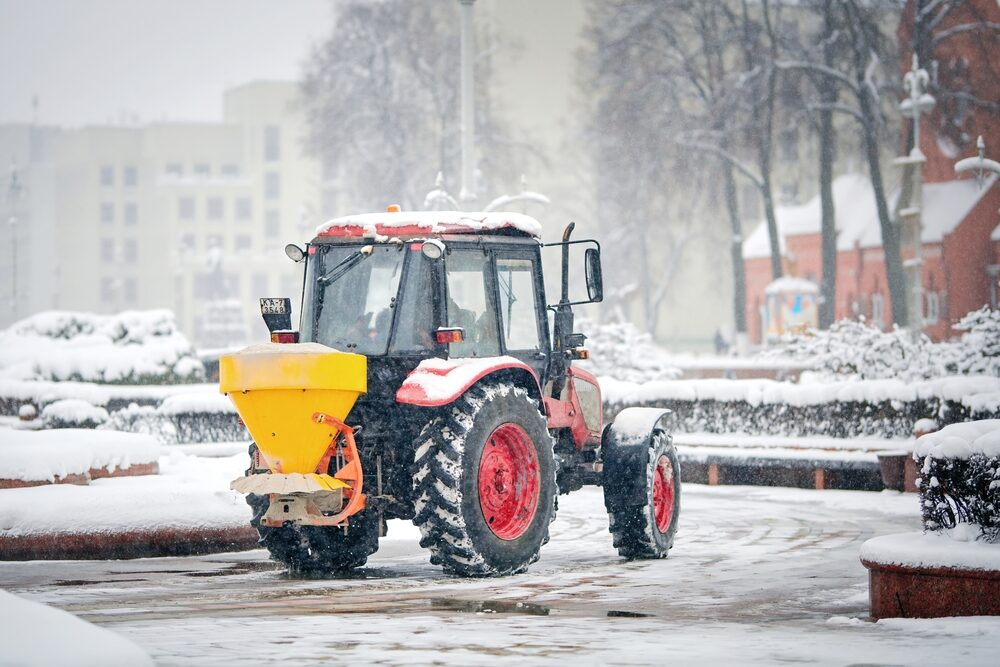

When winter storms hit commercial properties, maintaining clean, clear pavement surfaces requires a well-planned ice control strategy. Modern commercial site management goes beyond simply spreading material after snow has already fallen. Property managers and facility directors must choose the most effective combination of ice control methods to achieve fast, high-quality surface clarity.
Two primary techniques drive commercial deicing today: proactive liquid anti-icing pre-treatments and reactive granular rock salt applications. While both play an important role in winter maintenance, they work in fundamentally different ways and offer unique operational advantages.
DMC SNOW utilizes advanced ice control technology and temperature-driven application strategies to deliver optimal surface results for commercial facilities that need snow and ice management in Bucks County. Understanding how these treatment methods work allows commercial property managers to make informed decisions for their sites.
Liquid Anti-Icing: Proactive Prevention Before the Storm
Liquid anti-icing is a proactive technique that involves applying a specialized brine solution, typically a precisely engineered mix of water and sodium chloride or additive blends, onto dry pavement surfaces before winter precipitation begins.
How Liquid Anti-Icing Works
When DMC SNOW sprays liquid anti-icing brine onto asphalt or concrete, the water in the solution evaporates, leaving behind a fine layer of salt crystals embedded in the micro-textures of the pavement. When snow or freezing rain starts to fall, this pre-applied layer immediately goes to work dissolving incoming precipitation into a thin liquid brine layer directly at the pavement surface.
The Operational Benefit: Preventing the Bond
The single greatest advantage of liquid anti-icing is its ability to prevent snow and ice from bonding to the pavement surface. Without a pre-treatment, the pressure from vehicle tires packs falling snow tightly against cold asphalt, creating a dense, hard-packed layer of ice that sticks firmly to the ground. Once this hard-pack forms, standard plow blades ride up over it, leaving behind a slick, packed surface.
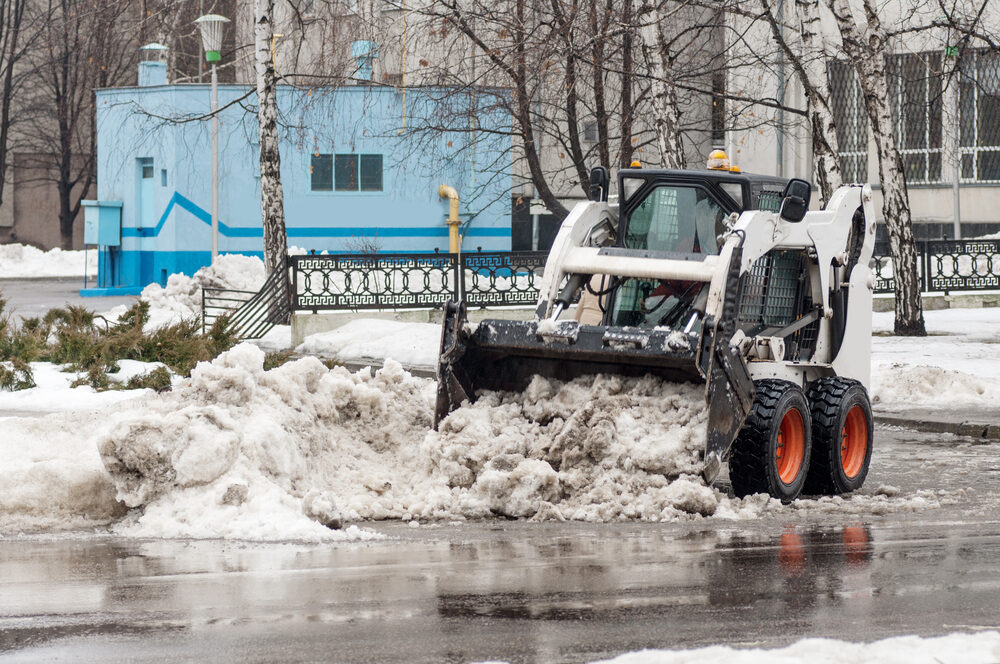
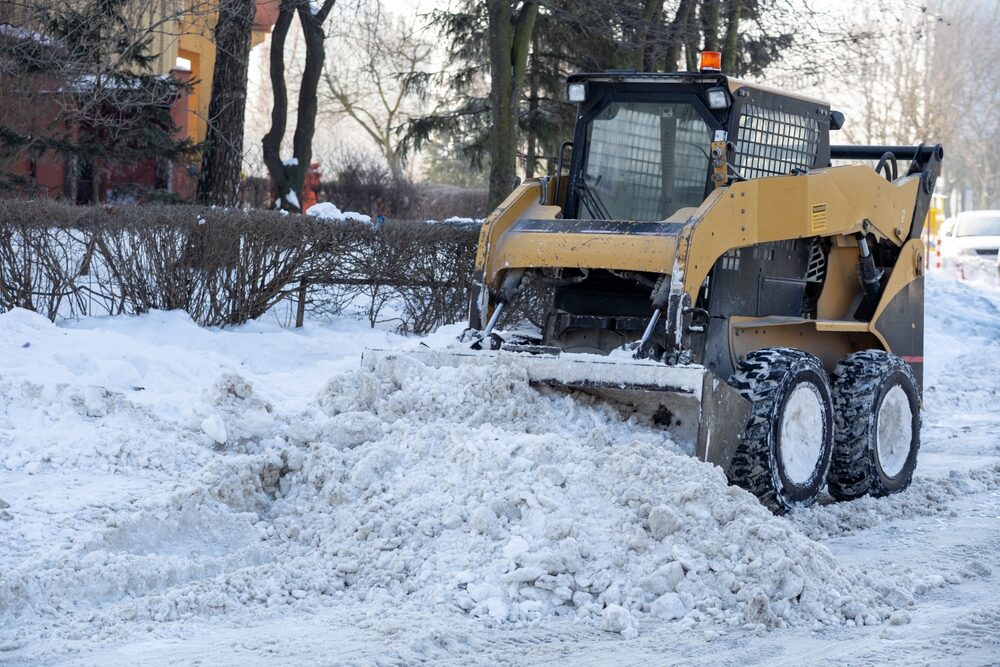
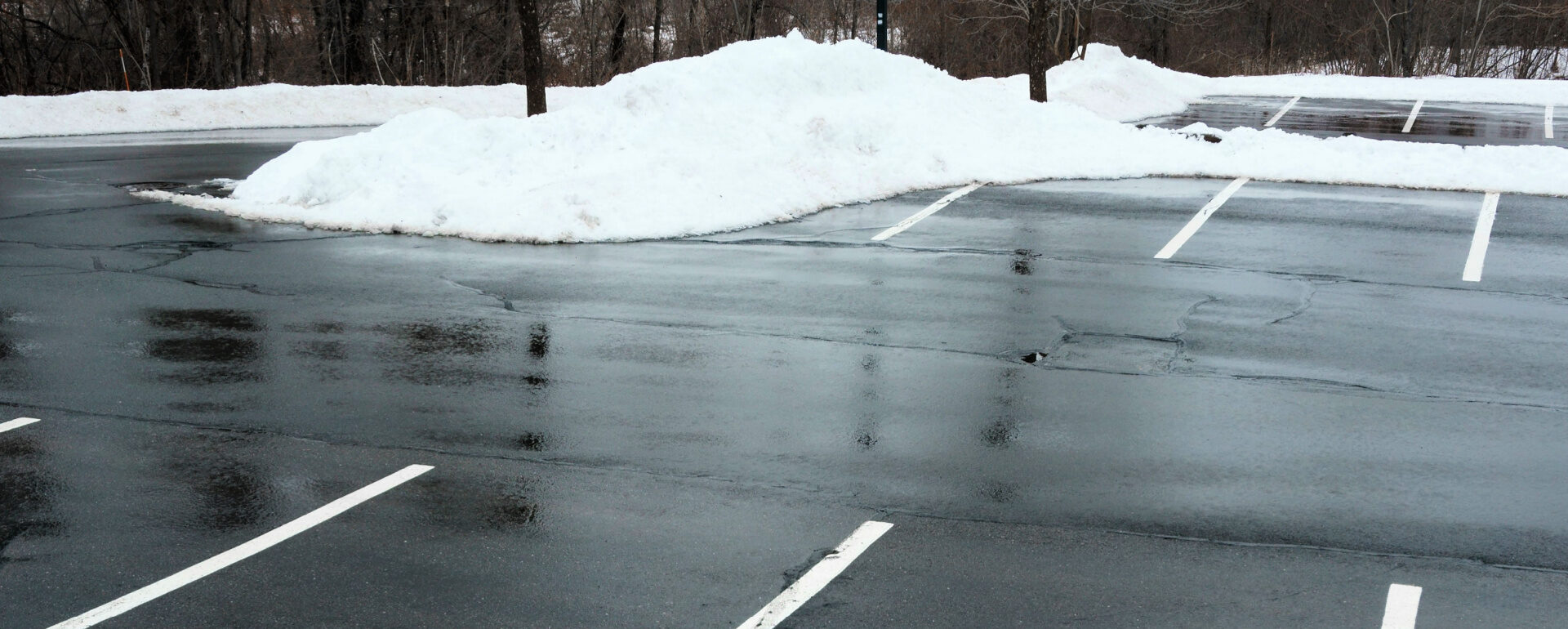
By applying a liquid pre-treatment before snowfall starts, DMC SNOW creates an active barrier that prevents hard-pack from forming. When snow plows make their initial passes across the lot, the plow blade easily lifts the loose snow away, scraping the surface down to bare pavement much faster and more cleanly than on untreated surfaces.
Key Advantages of Liquid Anti-Icing:
- Immediate Action at Storm Onset: The treatment starts working the second the first snowflake touches the ground, eliminating lag time.
- Elimination of Scatter and Bounce: Unlike solid salt granules that roll, bounce, and scatter into curb lines or grassy borders when dropped from a spreader, liquid brine stays precisely where it is sprayed.
- Higher Efficiency and Reduced Material Usage: Because liquid brine treats the pavement surface directly, it requires significantly less raw salt content to achieve the same initial melting performance as dry granular applications.
- Cleaner Commercial Entrances: Granular salt is easily tracked into lobby areas, hallways, and retail store entrances, creating mess and requiring additional cleaning. Liquid anti-icing dries onto the pavement, preventing material tracking into building interiors.
Granular Rock Salt: Reactive Deicing During and After the Storm
While liquid anti-icing is a proactive pre-treatment, traditional granular rock salt is primarily a reactive deicing solution. It is applied during or after a storm event once snow accumulation has begun or after initial plowing passes have cleared the top layer of snow.
How Granular Deicing Works
Solid rock salt granules do not melt ice instantly upon contact. For rock salt to work, it must first absorb moisture from the surrounding snow or humidity to form a concentrated liquid brine pocket around each granule. As heat is exchanged, this brine pocket melts downward through the snow or ice layer until it reaches the pavement surface, spreading horizontally to break the bond from the ground up.
The Role of Granular Application in Commercial Clearing
Despite the advantages of liquid anti-icing, granular deicing remains a critical component of commercial winter management. DMC SNOW uses granular applications under specific storm conditions:
- Melting Existing Accumulation: If a storm begins unexpectedly or conditions prevent a pre-storm liquid application, granular rock salt is essential for burning through established snow cover and hard-packed ice layer accumulation.
- Handling Heavy, Saturated Snowstorms: During intense, high-moisture storms where rainfall transitions into heavy snow, liquid pre-treatments can become diluted. High-capacity granular salt applications provide the sustained chemical concentration needed to keep high-traffic drive lanes clear.
- Post-Plowing Surface Cleanup: After heavy wheel loaders and plow trucks finish clearing main parking bays, DMC SNOW applies granular material across drive aisles, turning points, and intersections to melt remaining snow dust and keep surfaces clear.
Comparing Treatment Methods: At a Glance
Understanding how these two methods differ across key operational factors helps clarify their role on commercial sites:
- Timing of Application
- Liquid Anti-Icing: Applied BEFORE snowfall starts.
- Granular Rock Salt: Applied DURING or AFTER snowfall.
- Primary Objective
- Liquid Anti-Icing: Prevents snow and ice from bonding to the pavement.
- Granular Rock Salt: Melts existing snow and breaks established ice bonds.
- Material Stability
- Liquid Anti-Icing: Stays where applied with zero bounce or scatter.
- Granular Rock Salt: Bounces and scatters under truck traffic and spreaders.
- Plow Efficiency Impact
- Liquid Anti-Icing: Allows plows to scrape down to bare pavement effortlessly.
- Granular Rock Salt: Requires time to form brine before plows can clear hard-pack.
- Building Interior Tracking
- Liquid Anti-Icing: Zero tracking into lobbies or building entrances.
- Granular Rock Salt: Solid granules get tracked onto carpets and floor mats.
- Best Temperature Range
- Liquid Anti-Icing: Optimal down to ~20°F (-6°C) pavement temperature.
- Granular Rock Salt: Effective down to ~15°F (-9°C), with additives used for lower drops.
The Science of Pavement Temperature in Material Selection
A critical aspect of professional ice control that is often overlooked is the difference between air temperature and pavement temperature. Air temperature fluctuates rapidly with wind and sunlight, whereas asphalt and concrete retain thermal mass, heating up and cooling down much more slowly than the surrounding air.
DMC SNOW utilizes infrared pavement temperature sensors to guide every material application decision:
- Pavement Temperatures Above 30°F (-1°C)
- Strategy: Standard liquid brine pre-treatments deliver rapid, highly effective surface clarity with minimal chemical volume.
- Pavement Temperatures Between 20°F and 30°F (-6°C to -1°C)
- Strategy: Liquid applications blended with organic performance additives (such as calcium chloride or magnesium blends) enhance melting power and lower freezing points.
- Pavement Temperatures Below 15°F (-9°C)
- Strategy: Standard rock salt performance slows dramatically. DMC SNOW transitions to pre-wetted granular salt or specialized treated deicers to maintain surface melting capability.
Delivering Exceptional Surface Results for Your Facility
Achieving clean, clear pavement across a commercial property is not a matter of simply dropping salt after a storm. It requires a balanced, scientific approach that pairs proactive liquid pre-treatments with strategic granular applications.
DMC SNOW combines advanced liquid application technology, high-capacity granular spreaders, and real-time pavement temperature monitoring to deliver customized ice control plans for commercial properties.
By preventing ice bonds before they form and applying targeted deicing when needed, DMC SNOW keeps your access roads, drive aisles, and parking areas clear, clean, and fully operational all season long. Contact us today!