

The forecast is grim: a major winter storm is bearing down on the region. For property managers, business owners, and anyone responsible for maintaining accessible outdoor spaces, this is the moment when the crucial decisions about snow and ice management must be made. At the heart of this strategy are two primary actions: plowing and deicing.
But when the first flakes start to fall, which one takes precedence? What’s the optimal sequence for maximum efficiency, operational reliability, and cost-effectiveness? The answer isn’t always a simple A-then-B, but rather a sophisticated, choreographed dance between pre-treatment, active plowing, and post-storm deicing, all dictated by the specific conditions of the storm.
As DMC SNOW, we’re experts in this winter warfare and can deliver snow and ice management in Chester County. Let’s break down the timing and purpose of plowing versus deicing to reveal the science behind a successful storm response.
Phase 1: The Critical Pre-Treatment (Deicing’s Head Start)
Contrary to the idea that a response only begins once the snow is accumulating, the most critical step often happens before the first snowflake. This is the pre-treatment phase, and it belongs entirely to deicing.
The Purpose of Anti-Icing
The term for this proactive application is anti-icing. We apply a brine solution to the pavement hours before the storm is expected to hit.
The goal isn’t to prevent snow from falling; it’s to prevent the bond between the snow/ice and the pavement. When precipitation begins, the pre-treatment forms a thin, protective layer that keeps the freezing water from adhering stubbornly to the surface. This is often called a “release layer” or “non-stick” barrier.
- Operational Advantage: It helps maintain better traction during the initial hours of the storm, supporting uninterrupted access for vehicles and pedestrians.
- Plowing Advantage: It makes the subsequent plowing operations significantly easier and more effective, allowing the plow blade to scrape the pavement clean, rather than leaving a difficult-to-remove layer of compacted snow and ice.
- Cost Advantage: Using a liquid anti-icing agent is generally more cost-effective than using bulk rock salt to melt a thick layer of accumulated ice later.
The Verdict for Phase 1: Deicing (in the form of anti-icing) always happens first. It sets the foundation for everything that follows.
Phase 2: The Active Storm Response (Plowing Takes the Lead)
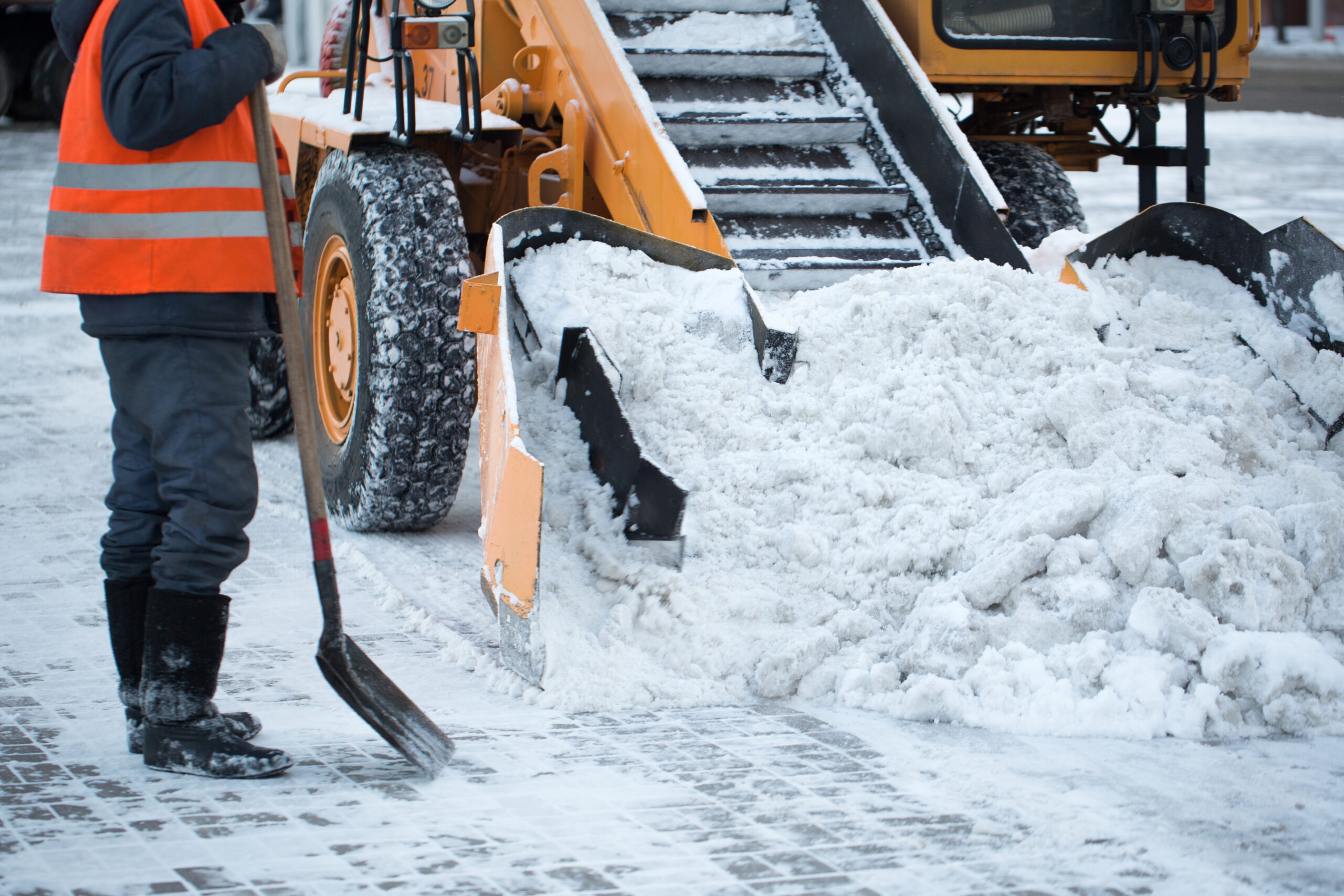
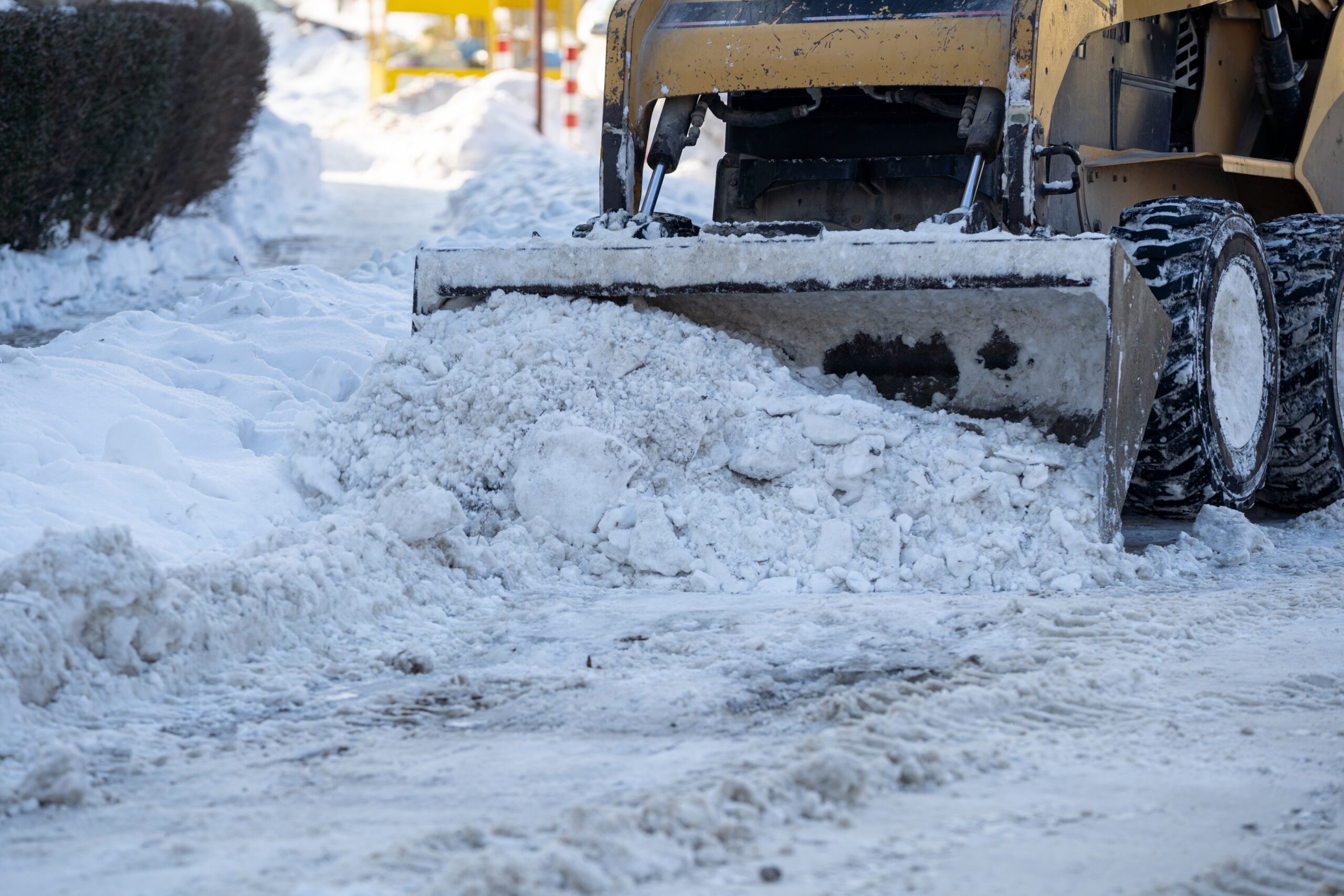
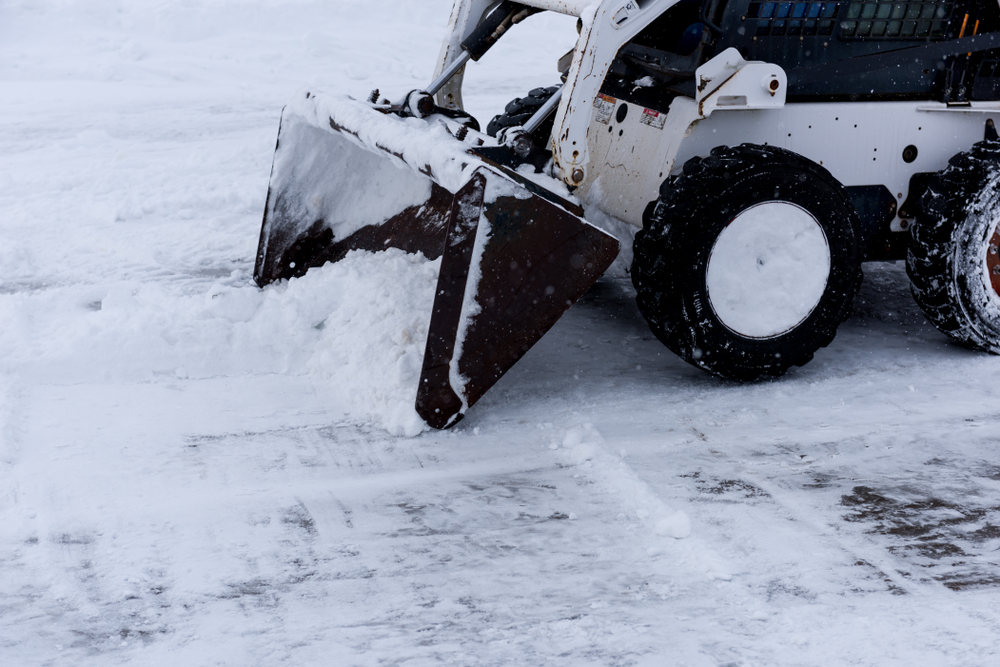
Once the storm is underway and accumulation rates are rising, the focus shifts to plowing. This is the bulk of the work and the most visible part of our operation.
When and Why We Start Plowing
Plowing is the process of physically removing the bulk of the snow. DMC SNOW crews are typically mobilized when the snow depth reaches a predetermined trigger point, often 2 to 3 inches. This trigger is vital for several reasons:
- Preventing Compaction: If snow is allowed to accumulate too deeply, it gets driven over by vehicles and foot traffic, quickly compacting into a dense, icy layer called “packed snow”. This packed snow is incredibly difficult to remove and often requires heavy-duty deicing chemicals, chipping, or scraping, which can damage the pavement.
- Maintaining Access: Starting early helps critical access areas—like fire lanes, emergency access points, high-traffic parking lot paths, and primary walkways—remain accessible for the duration of the storm.
- Deicing Efficiency: Plowing first removes the insulating layer of snow. Deicing chemicals work by dissolving into water to create brine, which lowers the freezing point. If the salt is simply spread on top of 6 inches of snow, it has to melt all that snow just to reach the pavement where the real problem (the icy bond) lies. By plowing, we expose the pavement, allowing the deicing agents to work directly where they are needed most.
The Plowing Strategy:
- Continuous Cycles: During a heavy storm, plowing isn’t a one-and-done event. Our crews work in continuous cycles, often clearing a property multiple times to prevent re-accumulation.
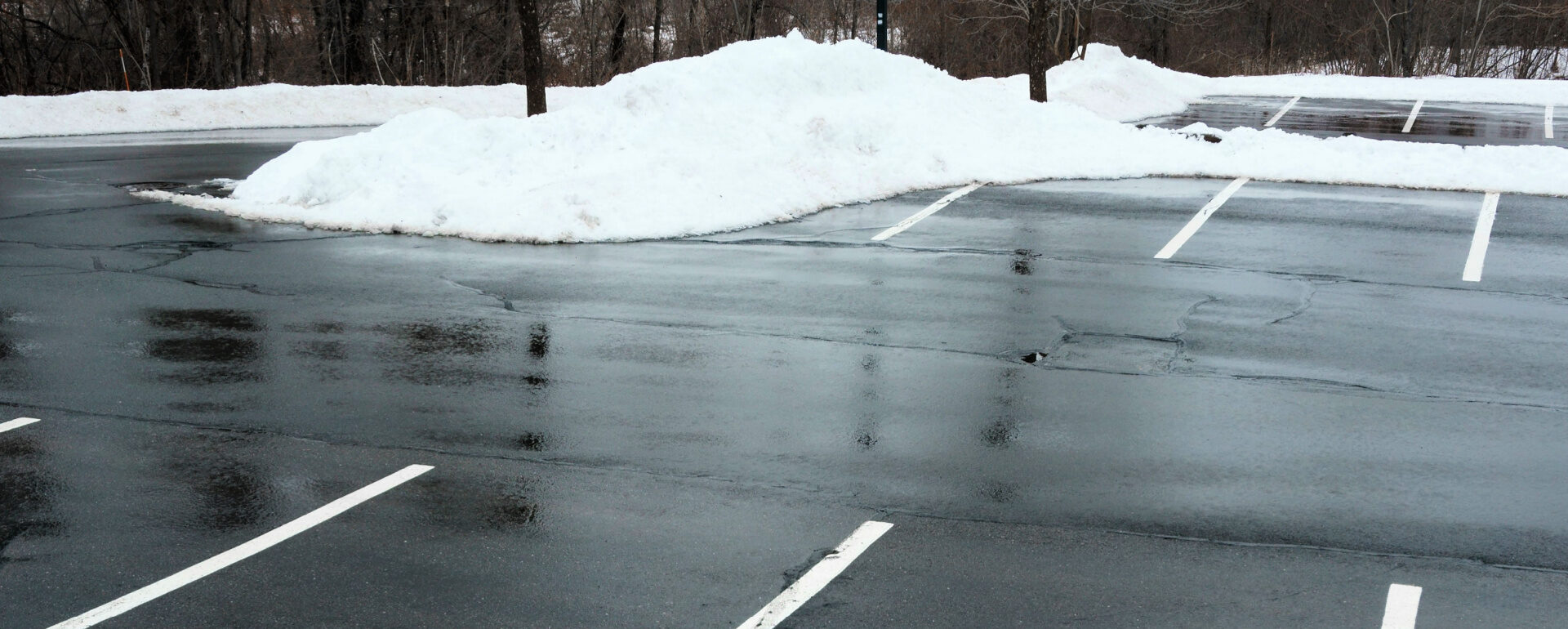
- Strategic Stacking: Snow must be pushed to designated areas—away from fire hydrants, accessible parking spots, and building entrances—to maximize the usable space on the property.
The Verdict for Phase 2: Plowing becomes the dominant activity during the storm, physically removing the majority of the precipitation.
Phase 3: The Clean-Up and Residual Control (Deicing Finishes the Job)
Once the snow accumulation slows or stops, the final and often most important stage of the storm response begins. This is where deicing returns to the forefront.
Post-Plow Deicing: Melting the Residual
After the plows have made their final pass, they cannot physically remove every single flake or the thin film of moisture that remains. If that residual moisture is left alone, it will freeze almost instantly, creating a surface hazard.
This is where the final deicing application comes in.
- Targeted Application: We spread granular deicing material (salt, often mixed with an abrasive like sand for immediate traction) or apply liquid agents to the cleared pavement, sidewalks, and walkways.
- Melting the Bond: The chemicals work to melt the thin layer of ice or residual pack snow that the plows missed, helping to achieve a near-dry surface.
- Addressing Refreeze: Even after the storm, the temperature can fluctuate (e.g., above freezing during the day, plummeting at night). Deicing agents provide a measure of residual protection against overnight refreeze.
The Verdict for Phase 3: Deicing is the final essential step, converting a cleared surface into a highly operational, accessible surface.
Don’t leave your property’s operation to chance this winter and call us for snow removal in Chester County and across the area. At DMC SNOW, we use this strategic, phased approach to help your commercial property remain accessible and fully operational, no matter how severe the storm. Contact us today!