
Winter weather can be unpredictable, but your business operations shouldn’t be. For commercial property managers and facility owners, maintaining a clear, accessible site is about more than just moving snow; it’s about operational continuity and professional excellence.
At DMC SNOW, we specialize in high-capacity commercial snow and ice management near Chester County and across the area. This guide breaks down the technical process of commercial snow removal, from the first flake to the final haul-away, focusing on efficiency, equipment precision, and reliability.
Phase 1: Site Mapping and Equipment Deployment
A successful commercial response begins long before the storm hits. Every property has a unique “flow,” and understanding this layout is critical for rapid clearing.
1. Identifying Priority Zones
Commercial sites are categorized by traffic flow. High-priority areas typically include:
- Primary Access Points: Main entrances and shipping/receiving docks.
- High-Traffic Thoroughfares: Main driving lanes that connect different sections of a parking lot.
- Pedestrian Walkways: Concrete paths leading from parking areas to building vestibules.
2. Strategic Snow Staking
Before the ground freezes, our teams install high-visibility markers. These stakes serve as a roadmap for equipment operators, identifying the edges of curbs, fire hydrants, and delicate landscaping. This precision makes sure that even under heavy accumulation, the integrity of your hardscaping is maintained.
3. Equipment Selection
Commercial snow removal near the Lehigh Valley requires heavy-duty machinery. Depending on the size of your facility, the fleet may include:
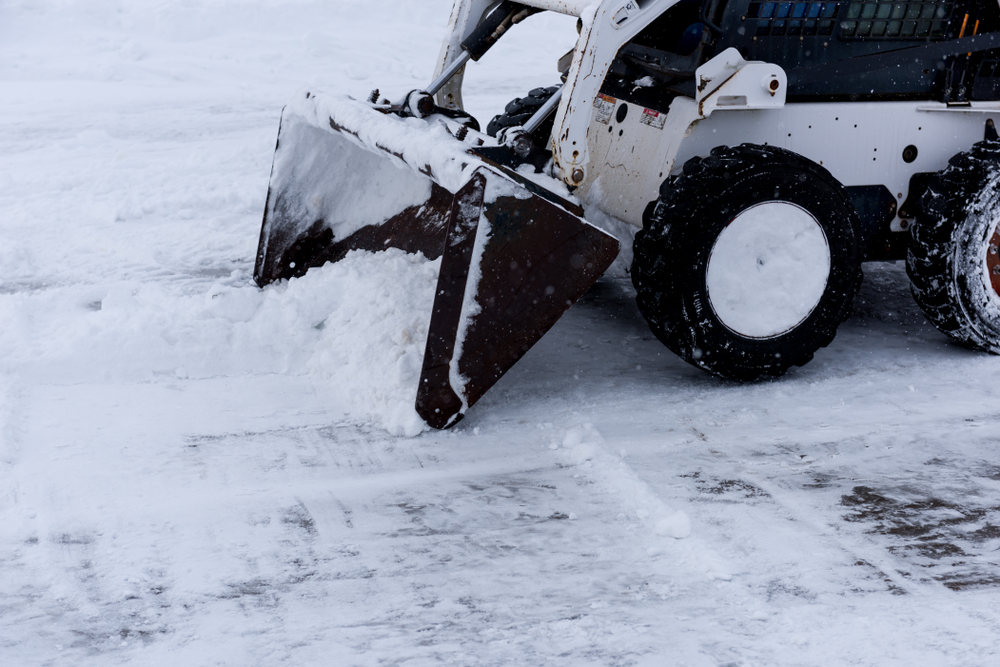
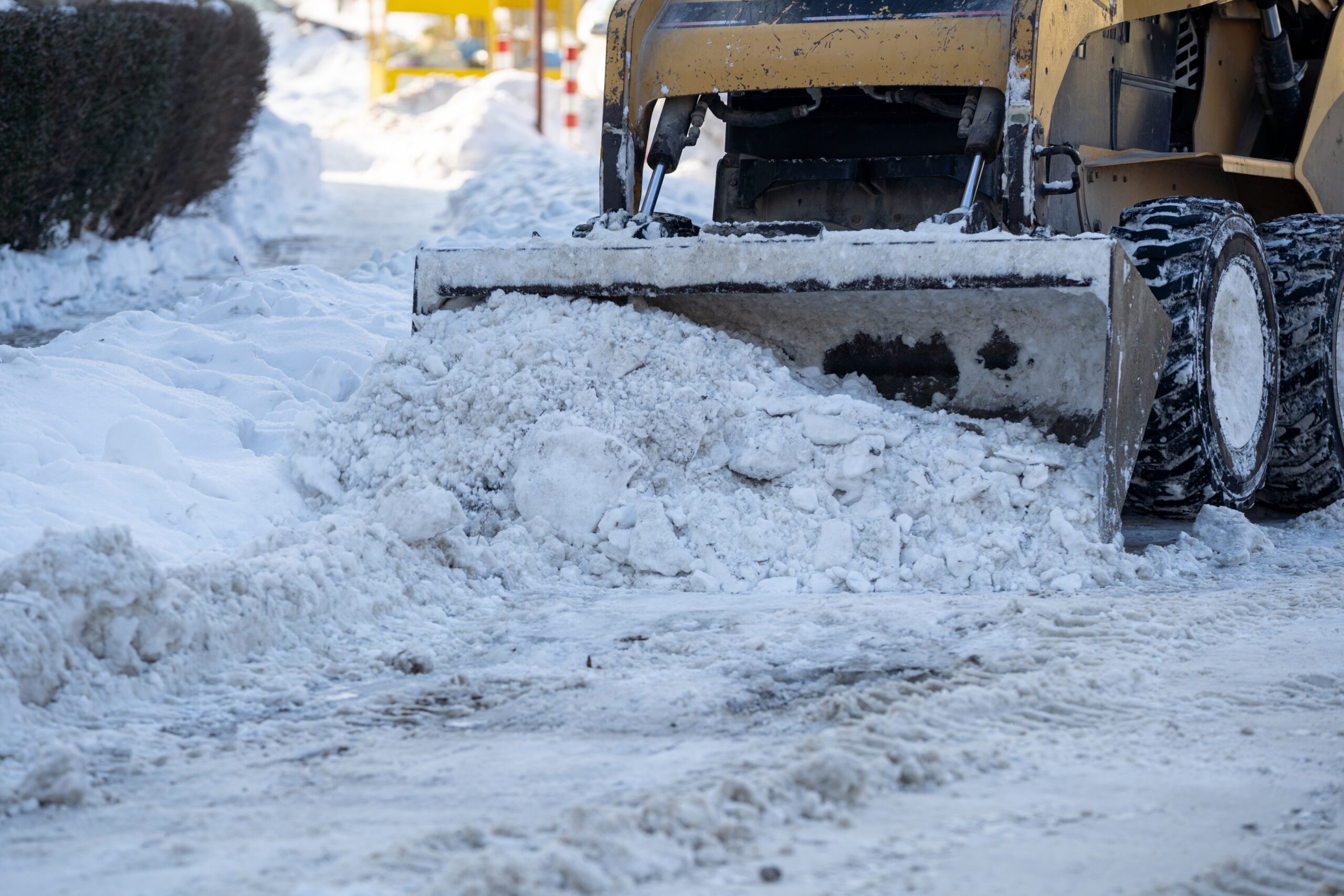
- Skid Steers: Ideal for tight corners and intricate walkway clearing.
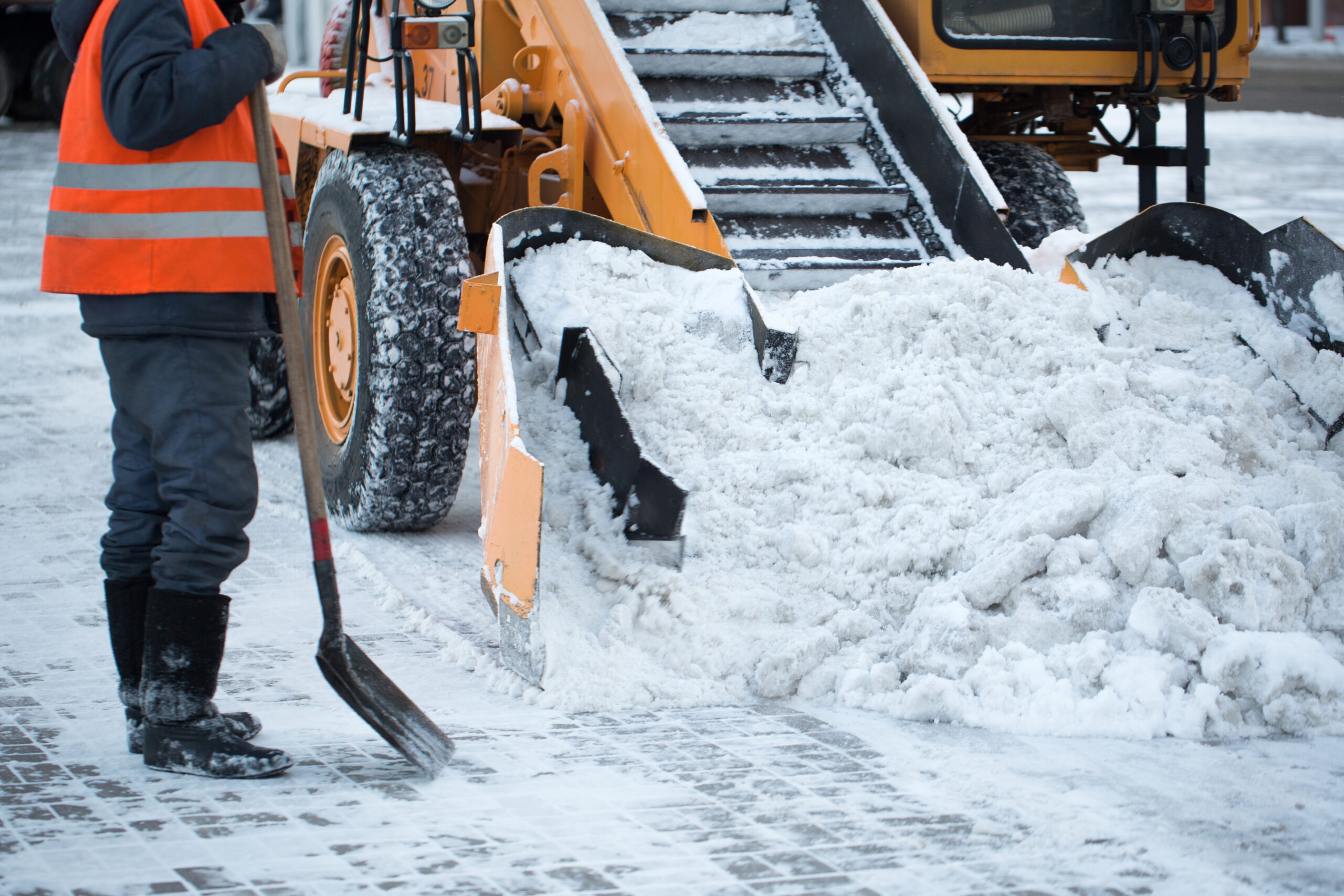
- Wheel Loaders with Box Pushers: Used for large-scale parking lots to move massive volumes of snow quickly.
- Specialized Sidewalk Machines: Narrow-frame units designed to clear pedestrian paths in a single pass.
Phase 2: The Clearing Process (The Active Storm)
When the accumulation reaches a predetermined depth, the active clearing phase begins. Our goal is to maintain a professional appearance and full accessibility throughout the duration of the weather event.
Step 1: Plowing and Pushing
Unlike residential clearing, commercial plowing is about logistics. Operators use “back-pushing” techniques to pull snow away from loading docks and building faces before pushing it into centralized collection points.
Step 2: Strategic Piling
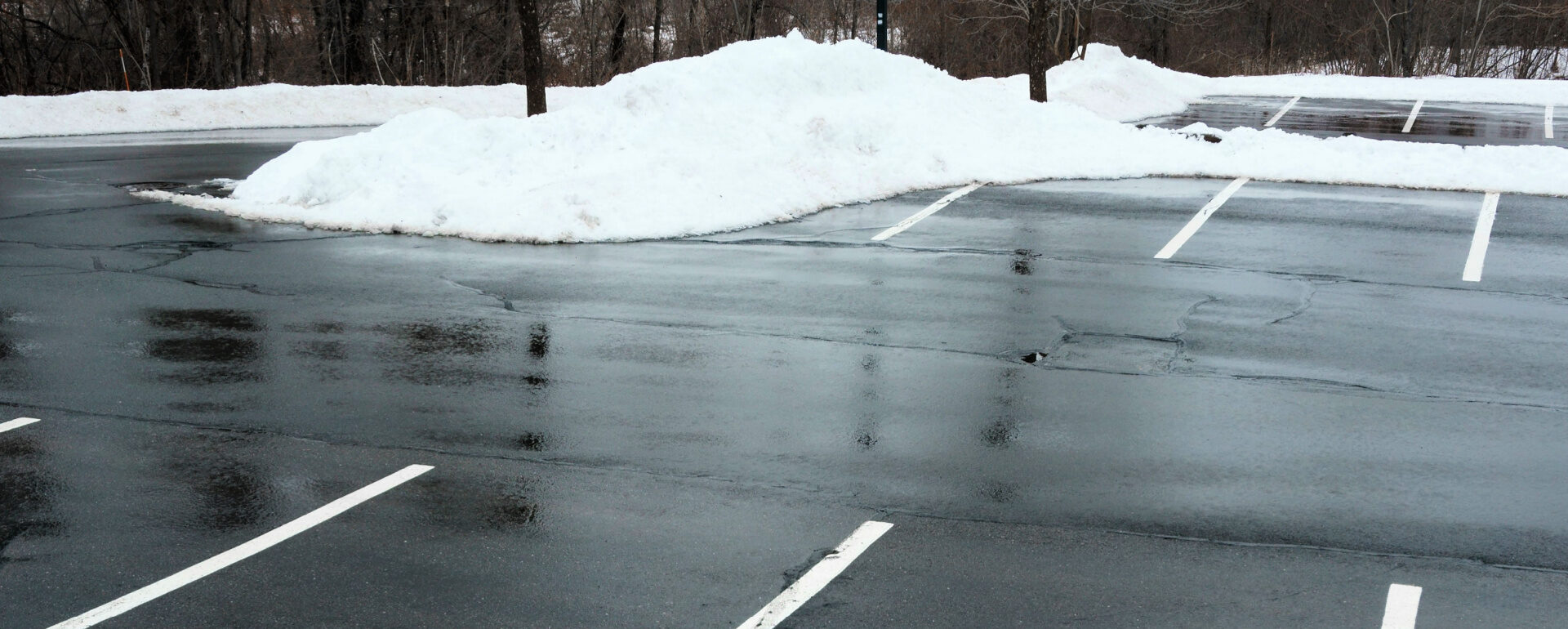
Where snow is placed is just as important as how it is moved. Professional operators identify “dead zones”, areas of the parking lot that aren’t utilized for parking or transit, to stack snow. This prevents the loss of valuable parking stalls and makes sure that melting snow drains properly into catch basins rather than refreezing across driving lanes.
Step 3: Sidewalk Management
Sidewalks require a different tactical approach. Using a combination of mechanical sweeping and specialized spreading equipment, teams ensure that all pedestrian corridors are cleared edge-to-edge. This creates a seamless transition from the parking area to the building interior.
Phase 3: Advanced Material Application
Once the bulk of the snow is removed, the focus shifts to surface treatment. Effective material application is a science that depends heavily on temperature and surface type.
Bulk Liquid De-Icing vs. Granular Slat
- Pre-Treating (Anti-Icing): Applying liquid brine before a storm prevents the bond between snow and pavement. This makes the mechanical clearing process much more efficient.
- Post-Storm Treatment: Once the pavement is cleared, granular de-icers are applied to manage any remaining thin layers of frozen precipitation.
Precision Application
Modern commercial spreaders use calibrated technology to make sure the correct amount of material is applied. Over-application can lead to tracking material into your buildings, while under-application results in an unfinished look. We aim for the “sweet spot” that results in clean, dry pavement.
Phase 4: Snow Relocation and Hauling
On large commercial sites or during winters with heavy accumulation, “piling” snow is only a temporary solution. When snow piles become too large, they can obstruct sightlines or take up essential square footage.
On-Site Relocation
If a property has unused acreage, we use heavy loaders to move snow from the parking lot to a more remote area of the site. This keeps the primary business areas clear and professional.
Off-Site Hauling
In urban environments or high-density retail centers, there may be no room for snow piles. In these cases, we utilize:
- Tri-Axle Dump Trucks: For transporting snow to designated melting facilities.
- Large-Scale Loaders: To quickly fill trucks and minimize the time spent on-site.
Why Professional Management Matters
Managing a commercial property during the winter is a 24/7 commitment. Partnering with a dedicated service provider like DMC SNOW offers several key advantages:
| Feature | Commercial Professional (DMC SNOW) | General Contractor / DIY |
| Equipment | Specialized pushers & liquid applicators | Standard plows and hand shovels |
| Response Time | Real-time weather monitoring & 24/7 dispatch | Reactive/Delayed response |
| Site Care | Pre-season staking & site mapping | High risk of curb and landscape damage |
| Professionalism | Uniformed crews & GPS-tracked fleets | Inconsistent service levels |
Maintaining a “Business as Usual” Environment
The ultimate metric of success for commercial snow removal is invisibility. When a professional team handles your winter maintenance, your employees, tenants, and customers should be able to access the property as if the storm never happened.
By focusing on high-quality service, modern equipment, and strategic logistics, we make sure that your facility remains a reflection of your company’s high standards, regardless of the forecast.
Quality Control and Reporting
At DMC SNOW, we utilize digital logging to track every visit. This provides property managers with a clear record of:
- Time of arrival and departure.
- Specific services performed (plowing, de-icing, sidewalk clearing).
- Materials used.
- Photo documentation of the finished site.
This level of transparency makes sure that you are always in the loop regarding the status of your property.
Conclusion: Ready for the Next Storm?
Commercial snow removal is a complex logistical dance that requires the right equipment, a dedicated team, and a proactive strategy. By following a structured, step-by-step approach, from site mapping to off-site hauling, DMC SNOW makes sure your property remains operational and professional all winter long. Contact us today!