

The standard approach to winter prep is a frantic scramble during the season’s first blizzard warning, but at DMC SNOW, we know true operational readiness begins right now. Dedicating time to off-season maintenance ensures your plows, pushers, and salt spreaders aren’t just sitting in storage gathering dust, they are preserving your capital investment. Taking a few proactive steps today prevents costly mid-storm breakdowns when your clients are counting on you most.
Procrastinating on maintenance doesn’t actually save you money; it just turns small, predictable costs into massive, last-minute headaches during a blizzard. This guide is our attempt to lay out what we check, service, and replace before the first flakes even think about flying.
Key Takeaways
- That emergency repair you need during a storm will easily cost three to five times more than the same fix scheduled calmly in the off-season.
- It only takes one major equipment failure to bring an entire commercial property to a standstill for the whole storm.
- More often than not, it’s a loose electrical connection, not a dead battery, that causes most of our equipment downtime in the field.
- With a solid off-season maintenance plan, you can realistically double a machine’s working lifespan from about five years to ten.
- We make it a rule to sample the hydraulic fluid for any signs of moisture or contamination before the snow season officially begins.
Why the Real Work Happens in the Off-Season
The difference between a reliable fleet and one that’s constantly breaking down mid-storm almost always comes down to what happens when the snow is gone. Commercial snow removal gear takes an absolute beating every winter, plows scrape and grind against pavement, spreaders deal with corrosive salt, and hydraulic lines get pushed to their limits. That’s why we look at the warmer months as our primary repair window. Frankly, every hour we spend inspecting a loader in July is an hour we won’t have to spend on a frantic, frozen breakdown in January.
By sticking to a proper off-season routine, you can sidestep most of those infuriating mid-season breakdowns while also extending the equipment’s life well beyond what the manufacturer might promise. Ultimately, it’s how we lock in the kind of reliability and efficiency our clients expect from us. Every single piece of equipment, plows, loaders, salt spreaders, and brine systems, gets a hands-on teardown and tune-up on a predictable schedule. That’s precisely how a machine that’s supposed to last five years ends up being a solid workhorse for ten.
The Cost of Skipping Maintenance
If you neglect the off-season work, the numbers can get ugly fast. Imagine a hydraulic failure on a Sunday at 2 a.m. during a 6-inch snowfall. That’s not just a repair bill; it’s an emergency repair bill that can be three to five times more expensive than a scheduled fix. You can also forget about finding parts easily mid-winter; availability tanks, which leads to longer downtime and routes that just don’t get done.
For our clients, those missed routes translate directly into lost revenue from closed parking lots and completely blocked loading docks. We’ve seen situations where a single downed machine has shut down operations at an entire site for the whole duration of a storm.
Our whole approach to commercial snow removal operations is built on the idea that equipment readiness isn’t a luxury, it’s the entire business. That’s why we treat off-season maintenance as a core service, not some optional afterthought.
Essential Maintenance Tasks for Snow Equipment
Any equipment that’s expected to perform in miserable, freezing conditions needs consistent, careful attention between storms. Here’s a rundown of what our crews do to keep every plow, spreader, and loader ready to go at a moment’s notice:
- Cleaning and Inspection: After every single outing, we wash off the salt residue and road grime from the frames, cutting edges, and undercarriages. Salt is incredibly corrosive. Our techs then get in there and inspect plow blades, edges, hoses, and welds for any signs of wear, replacing parts before they have a chance to fail in the middle of a 3-inch snowfall at 2 a.m.
- Lubrication of Moving Parts: All the pivots, hinges, spreader chains, auger bearings, and pump shafts get greased on a very strict schedule. We actually log the service hours for each individual unit so we can keep our lubrication intervals precise, which helps extend the life of these parts over many seasons.
- Electrical and Battery Care: Cold weather is just brutal on batteries. Our certified techs will load-test batteries, clean up the terminals, check ground straps, and verify all the plow harness and solenoid connections. We’ve found that loose connections cause more downtime than dead batteries, so we make sure to tighten and seal every last contact point.
- Hydraulic System Checks: We always sample the hydraulic fluid to check for moisture and contamination before the season kicks off. From there, cylinder seals, hose fittings, and pressure outputs are all examined against the manufacturer’s specs. A weak hydraulic line on a big 12-foot pusher can stop a job for hours, so we are religious about catching and fixing leaks early in the shop.
- Fluids, Filters, and Tires: All the critical fluids, engine oil, coolant, transmission fluid, and filters are serviced based on actual engine hours, not guesswork. We also record tire pressure and tread depth before each storm because having a good grip on a slippery loading dock approach is completely non-negotiable.
- Calibration of Spreaders: Salt and brine spreaders are calibrated for very precise application rates. Doing this not only keeps our material costs in check but also prevents the kind of property damage that can happen from over-application.
Special Considerations for Commercial Equipment
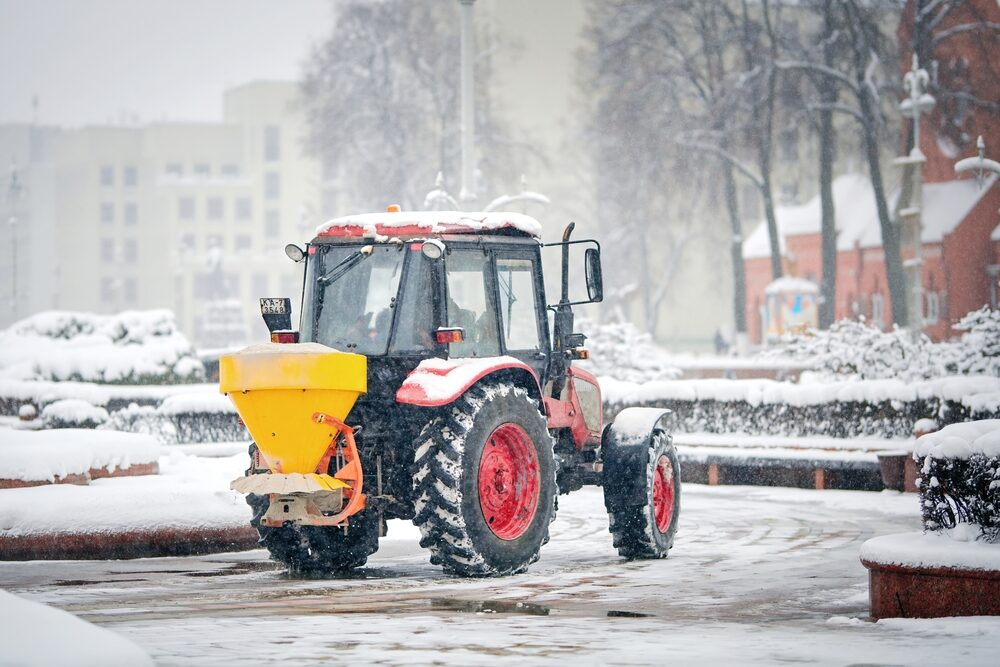
Commercial snow work demands machinery that was built specifically for the job, not the kind of thing you’d use on a small lot or a few sidewalks. This gear runs far more frequently, has to cover huge areas like corporate parking lots and long drive lanes, and takes on a ton more mechanical stress during a storm. For the expansive properties we cover, including our commercial snow plowing services in Chester County, our fleet is set up to run for 36-hour shifts without a break.
Operating Heavy-Duty Equipment
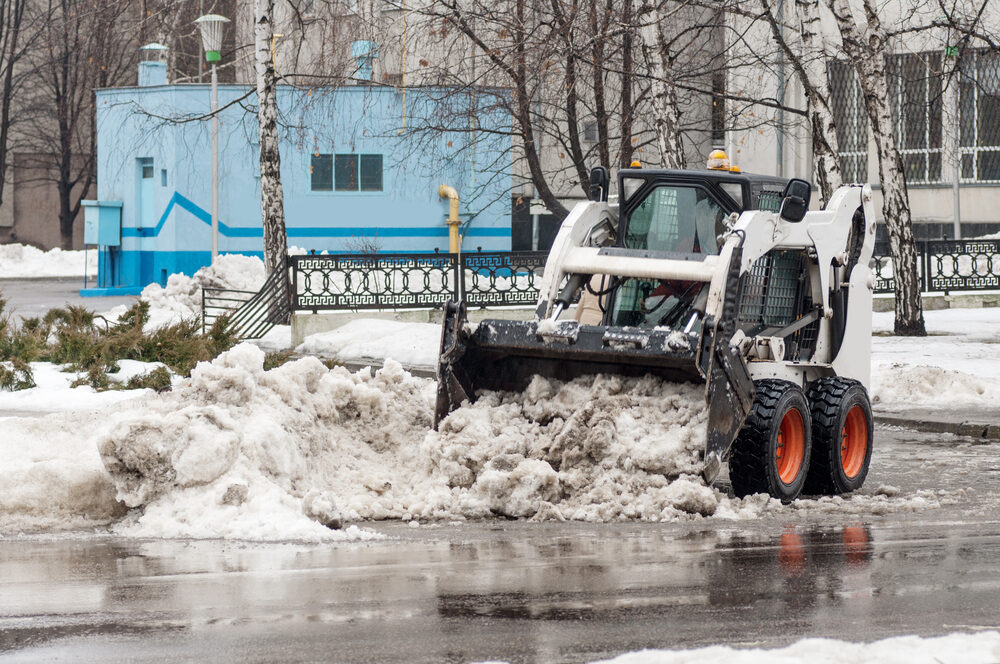
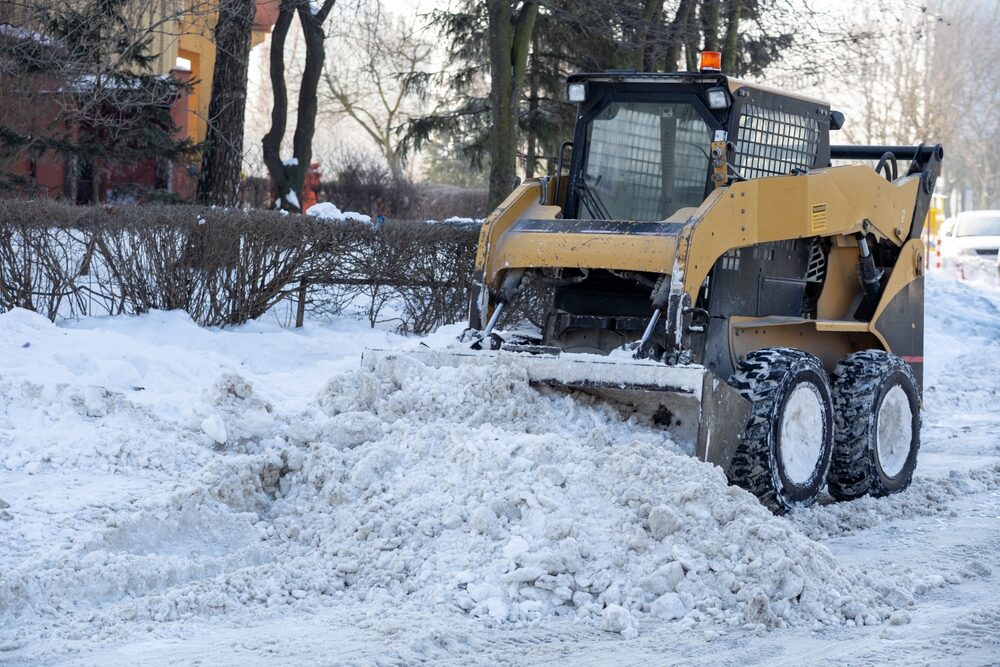
Heavy-duty loaders, plow trucks, and spreaders are built with stronger components across the board: think reinforced cutting edges, hydraulic systems designed for continuous operation, and frames that can handle repeated impacts. Our certified operators are trained to work these machines hard without breaking parts that could take weeks to replace in the middle of January. Every machine is specifically matched to its task, a skid steer that’s perfect for a tight courtyard just isn’t going to cut it on a 12-acre distribution center lot.
This intense level of demand is what makes regular professional inspections an absolute necessity. We conduct thorough pre-season and in-season checks on hydraulics, blade wear, spreader calibration, and all lighting systems. Every unit has a detailed service log that follows it for its entire life. In the end, it’s this commitment to maintenance that keeps our crews on schedule and our clients’ businesses running when the snow starts to pile up.
Relying on Experts for Maintenance
Handing off maintenance to experts helps protect your property in a way that most in-house crews simply can’t match. A professional commercial snow removal team arrives with dedicated equipment that’s been properly serviced, certified operators who know the machinery inside and out, and route plans based on your property’s specific needs.
Our teams are trained on commercial-grade loaders, plow trucks, and spreaders, and we’re on call 24/7 for the entire season. This isn’t just theory; it’s practical expertise we’ve honed over decades in the field. For businesses managing snow and ice management in Chester County, our exclusive contracts mean your route capacity is secured long before the first storm hits.
Steering Clear of Common Pitfalls
One of the most common mistakes we see is when people ignore what seem like minor issues until they escalate into seriously costly problems. A small crack in a curb, a blocked storm drain, or a slightly worn plow edge, these things get shrugged off in October but can turn into major headaches by January. We’ve assessed properties where one overlooked detail, like a sunken catch basin hidden under the snow, ended up costing thousands in equipment and property damage.
The second big mistake is neglecting seasonal site checks. A pre-season walkthrough is critical for mapping out every fire hydrant, curb island, and ADA-accessible path before they’re buried in snow. When that first storm hits, crews that haven’t walked the site beforehand are left guessing, and guessing on a commercial property is a recipe for property damage.
Contact DMC SNOW today for more assistance & information in the off season to prepare for when in-season blizzards hit.