

Selecting the appropriate de-icing chemical for a commercial property requires balancing melting performance, atmospheric temperature, and hardscape material composition. Using a single generic de-icer across an entire facility leads to operational inefficiencies, wasted material, and accelerated deterioration of expensive concrete structures.
Professional commercial snow and ice management in Bucks County teams like DMC SNOW rely on targeted de-icing strategies: analyzing surface types, ambient temperature thresholds, and product chemistry to deploy the right product at the correct rate.
Temperature Cutoffs: Standard Rock Salt vs. Advanced De-Icers
All chemical de-icers lower the freezing point of water, but each compound has a specific effective working temperature threshold. Operating below a material’s effective range renders the application ineffective, leaving ice intact on commercial surfaces.
1. Sodium Chloride (Standard Rock Salt)
- Effective Working Range: 15°F to 32°F (-9°C to 0°C)
- Operational Profile: The standard product for general commercial parking lot clearing when temperatures remain moderate. It is economical for large-acreage applications but experiences a sharp drop-off in melting speed as pavement temperatures fall below 20°F (-7°C). At 10°F (-12°C), rock salt becomes virtually inert.
2. Magnesium Chloride
- Effective Working Range: -5°F to 32°F (-20°C to 0°C)
- Operational Profile: A premium compound utilized by DMC SNOW that melts ice significantly faster than sodium chloride at lower temperatures. It is less corrosive to surrounding vegetation and hardscapes, making it an ideal choice for high-end retail walkways, corporate entry plazas, and decorative hardscapes during cold snaps.
3. Calcium Chloride
- Effective Working Range: -25°F to 32°F (-31°C to 0°C)
- Operational Profile: The highest-performing solid de-icer available for extreme winter conditions. Calcium Chloride is exothermic, meaning it releases heat as it dissolves, actively melting ice even in severe sub-zero environments. It is deployed on critical commercial infrastructure, emergency access routes, and low-temperature logistical corridors.
Protecting Commercial Hardscapes: Preventing Surface Spalling
Commercial properties feature a wide variety of outdoor surfaces: asphalt parking fields, structural concrete parking decks, poured concrete walkways, and decorative pavers. Applying the wrong de-icing chemical can cause permanent damage to these assets through chemical attack or accelerated freeze-thaw cycles.
When high-damage chemicals are applied to uncured concrete or sensitive hardscapes, water seeps into sub-surface pores and refreezes, resulting in structural spalling and flaking. Conversely, matching material chemistry to specific pavement composition creates a controlled melting action that preserves surface integrity over long service lives.
Freeze-Thaw Spalling in Concrete
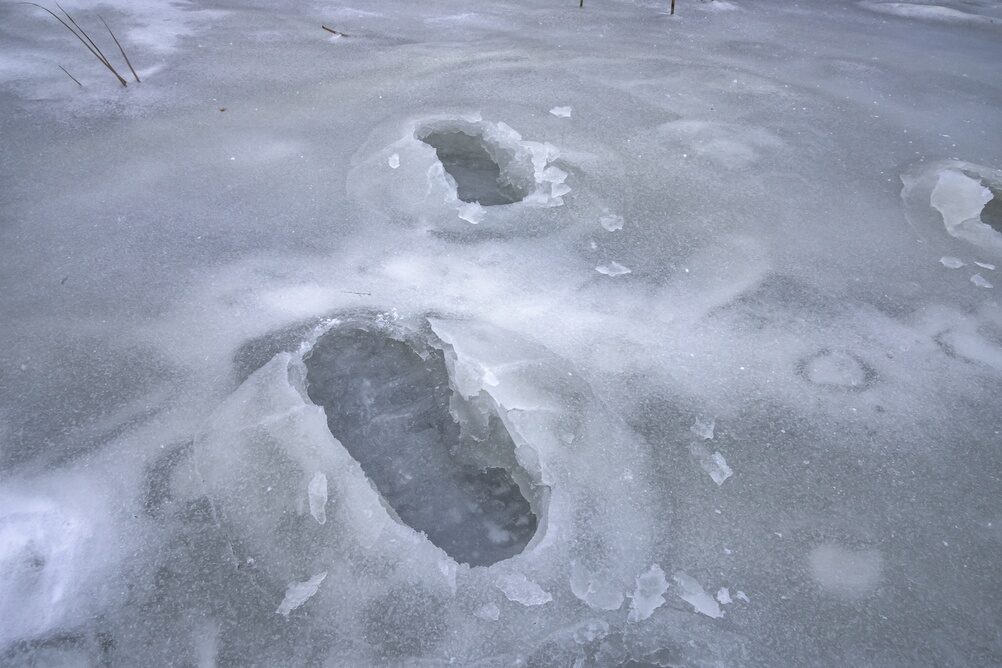
Concrete is a porous material. When ice melts into water, it seeps into the microscopic capillaries of the concrete matrix. If the de-icing chemical loses its effectiveness as temperatures drop, that absorbed water refreezes inside the concrete. Water expands by approximately 9% upon freezing, creating internal hydraulic pressure that fractures the concrete surface, causing flaking, scaling, and deep spalling.
To protect commercial hardscapes, the DMC SNOW team matches material selection to exact site conditions:
- New Concrete (Under 1 Year Old): Uncured concrete is particularly vulnerable to scaling. High-potency chloride salts should be avoided; mechanical clearing paired with non-corrosive melting compounds like Calcium Magnesium Acetate (CMA) preserves concrete integrity while managing ice.
- Elevated Parking Garages & Structures: Structural concrete decks containing steel rebar require non-corrosive de-icers to prevent chloride penetration, which rusts internal steel reinforcement and leads to structural spalling.
- Asphalt Pavement: Flexible asphalt handles standard sodium chloride well, but requires rubber-edged plow blades and calibrated granular application to prevent aggregate stripping.
Precision Spreader Calibration: Optimizing Product Rates Across Acreages
Broadcasting ice melt without precise controls results in uneven coverage, material waste, and unnecessary environmental runoff. Modern commercial snow operations at DMC SNOW use calibrated broadcast equipment integrated with ground-speed sensing technology.
Modern equipment connects vehicle speed sensors directly to variable flow rate dispenser gates. As vehicle velocity changes, the spreader automatically adjusts material output to maintain exact target rates (in pounds per 1,000 square feet) across all target areas.
Precision spreader calibration makes sure that application rates match the exact square footage of the target zone regardless of vehicle speed:
- Ground-Speed Control: Advanced spreaders automatically adjust the feed rate based on how fast the truck or utility vehicle is moving. If the vehicle slows down near a loading dock, the spreader reduces output, preventing product over-saturation.
- Zone Metering: Different areas of a commercial site require different application rates. Main drive aisles subject to heavy tire friction require lower application rates than shaded perimeter walkways or elevated access ramps.
- Material Accounting: Digital controls log exact tonnage applied per storm event, providing facility managers with transparent material tracking across multi-building campuses.
By combining temperature analysis, surface compatibility, and calibrated metering, DMC SNOW keeps commercial properties clear with functional surfaces throughout winter weather events without compromising hardscape longevity.
Protect Your Commercial Infrastructure with DMC SNOW
Make sure your commercial hardscapes, parking structures, and walkways are managed with the highest level of material science and precision technology this winter. DMC SNOW delivers targeted de-icing solutions engineered specifically for large-footprint commercial and industrial facilities.
Reach out to DMC SNOW today to request a customized site plan and secure dedicated commercial snow management for your property.